Point-of-use research
Best reverse osmosis systems of 2026
Nine of the best reverse osmosis systems ranked by certified contaminant claims, recovery efficiency, dispensing performance, filter costs, and warranty terms.

Taylor Rupe·Founder & Editor
B.A. Psychology · B.S. Computer Science · Updated September 4, 2026
How we ranked the best reverse osmosis systems for 2026
Reverse osmosis can reduce many dissolved contaminants, but every model has its own certified claims, production rate, recovery efficiency, and operating limits. A membrane category claim cannot tell you how an exact system performs at your pressure, temperature, and water chemistry. [4][5]
We scored the complete system, not a membrane’s advertised gallons per day. The useful record includes the certified daily production rate, dispensing behavior, storage design, tested contaminant claims, replacement schedule, sanitizing work, and the amount of water sent to drain. [5][2]
EPA’s WaterSense specification gives efficient point-of-use RO systems a clear benchmark: no more than 2.3 gallons of reject water for each gallon of treated water, plus required performance and membrane-life criteria. The label still does not prove every optional contaminant claim. [1][5]
The best reverse osmosis systems of 2026, ranked by certification, efficiency, and ownership cost
Documentation review
September 4, 2026
This shortlist rewards exact-model certification, useful output, water efficiency, transparent filter costs, and support. It does not treat a membrane's advertised GPD rating as whole-system delivery or turn a certification standard into an all-contaminant claim.
Rank 01 · Best overall
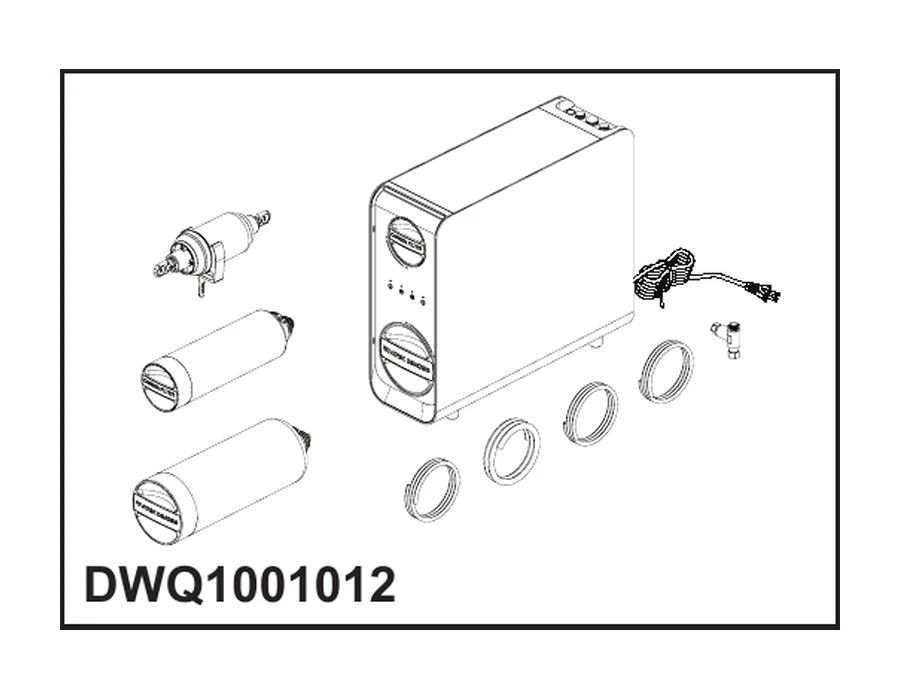
Delta Clarifi DWQ1001012
Delta Clarifi DWQ1001012 is our first choice because EPA lists 78% efficiency, Delta publishes 600 GPD, and the exact performance sheet supports broad reduction claims plus a five-year warranty. It requires an under-sink outlet, a larger equipment budget, and proprietary replacement cartridges.
- Certified efficiency
- 78% / ~0.28:1 drain
- Published output
- 600 GPD / 0.42 GPM
Rank 02 · Best high-output value
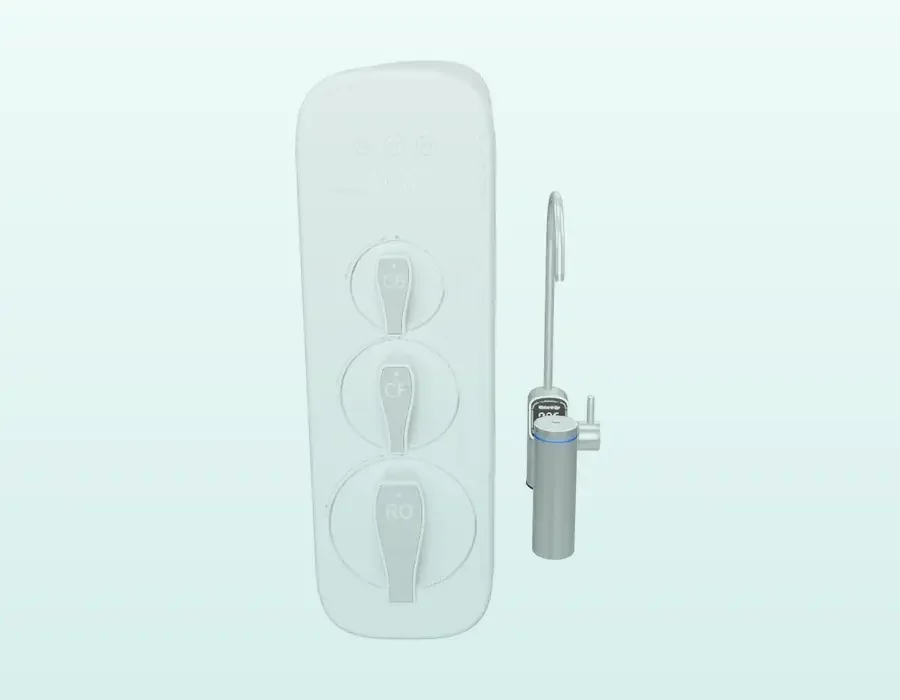
Waterdrop WD-G3P800
Choose Waterdrop WD-G3P800 for compact tankless delivery on a lower equipment budget; an independent field test measured 0.62 GPM and favorable drain ratios. The live IAPMO record covers six NSF/ANSI 58 reductions, and the hardware warranty lasts one year.
- Output
- 800 GPD published / 0.62 GPM tested
- Drain ratio
- 3:1 claimed / 1.5–2.21:1 tested
Rank 03 · Best dealer-supported system
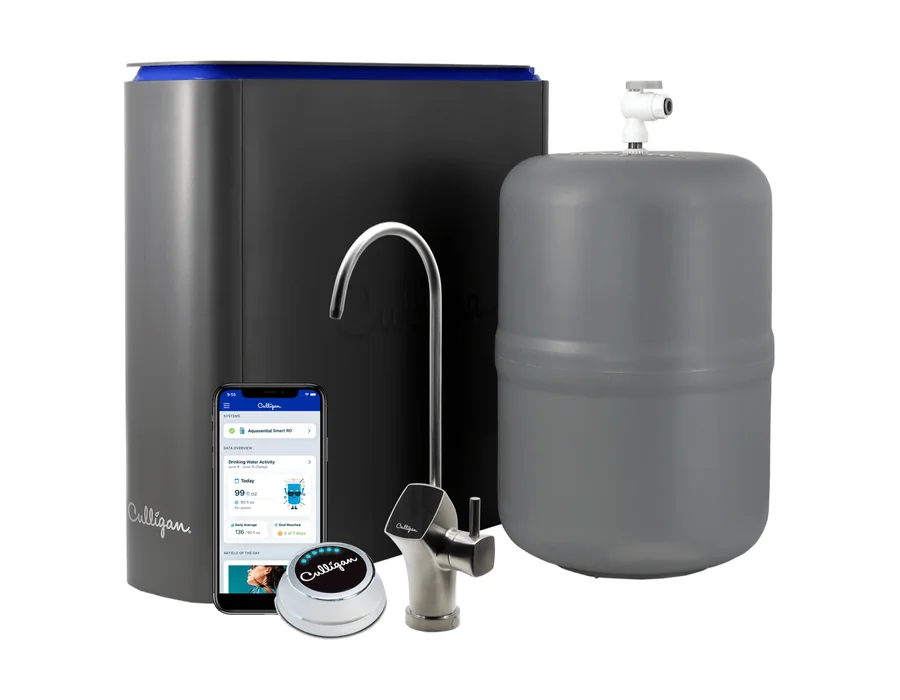
Culligan Aquasential Smart RO (RO 75 configuration)
Culligan Aquasential Smart RO in the RO 75 configuration is the service-first choice: a dealer handles installation and upkeep, and the certified table reports 54.7% system efficiency with unusually long component coverage. You must select the cartridge package to determine its contaminant claims, while equipment and replacement prices depend on local dealer quotes.
- Certified DPR
- 34.1 GPD
- System efficiency
- 54.7% / ~0.83:1 drain
Why it ranks #1 among the best reverse osmosis systems: Delta Clarifi DWQ1001012 is our first choice because EPA lists 78% efficiency, Delta publishes 600 GPD, and the exact performance sheet supports broad reduction claims plus a five-year warranty. It requires an under-sink outlet, a larger equipment budget, and proprietary replacement cartridges.
Buyers prioritizing verified scope, low drain flow, and fast tankless dispensing.
There is no outlet under the sink, the equipment budget is tight, or commodity cartridges are important.
EPA's WaterSense directory lists DWQ1001012 at 78% efficiency; that equates to about 0.28 gallon sent to drain per gallon treated. WaterSense reverse-osmosis product search DWQ1001012 specification and performance sheet
The performance sheet reports certified claims including total PFAS, lead, nitrate/nitrite, arsenic V, chromium III/VI, fluoride, TDS, VOC surrogate, cysts, and specified NSF 401 compounds. DWQ1001012 specification and performance sheet
Delta publishes 600 GPD and 0.42 GPM for the powered tankless unit; these are published output specifications, not a tank-system DPR comparison. Clarifi DWQ1001012 product page DWQ1001012 specification and performance sheet
At current list prices, the required prefilter, membrane, and carbon schedules annualize to about $172; the hardware warranty is five years. Clarifi replacement filters and prices DWQ1001012 specification and performance sheet
- Certified efficiency
- 78% / ~0.28:1 drain
- Published output
- 600 GPD / 0.42 GPM
- Format
- Tankless, powered
- Upkeep
- 2–6 yr filters / ~$172 yr
View Delta Clarifi DWQ1001012 score breakdown
Watch: Delta also uses a conservative 2:1 treated-to-drain marketing shorthand. The ranking uses the exact model's EPA/PDS figure instead. NSF/ANSI 372 addresses lead content in materials; Delta's separate lead-reduction result is the relevant removal claim.
Why it ranks #2 among the best reverse osmosis systems: Choose Waterdrop WD-G3P800 for compact tankless delivery on a lower equipment budget; an independent field test measured 0.62 GPM and favorable drain ratios. The live IAPMO record covers six NSF/ANSI 58 reductions, and the hardware warranty lasts one year.
Households wanting fast tankless dispensing and lower entry cost with power available under the sink.
A certified total-PFAS, nitrate/nitrite, VOC, or chlorine-reduction claim is a purchase requirement.
The current listing audit reports active IAPMO file WC-13976 for six NSF/ANSI 58 reduction claims; NSF/ANSI 372 is material lead-content compliance, not lead removal. IAPMO certificate search, file WC-13976 Independent live-listing change audit
Waterdrop publishes 800 GPD and a 3:1 treated-to-drain ratio. Independent field testing measured 0.62 GPM and ratios from 1.5:1 to 2.21:1, depending on draw size. WD-G3P800 product and replacement details Independent Tap Score lab and field review
Published CF, CB, and RO schedules annualize to roughly $155–$160 at current prices; the product warranty is one year. WD-G3P800 product and replacement details
- Output
- 800 GPD published / 0.62 GPM tested
- Drain ratio
- 3:1 claimed / 1.5–2.21:1 tested
- Format
- Tankless, powered, UV
- Upkeep
- 6/12/24 mo / ~$155–$160 yr
View Waterdrop WD-G3P800 score breakdown
Watch: The live IAPMO file WC-13976 was checked September 2, 2026. Current brand language, older PDFs, and some reviews describe 42/53 coverage that the live-listing audit did not confirm; product pages also conflict on a 2,200- versus 2,900-gallon membrane life. Recheck the exact record before purchase.
Best reverse osmosis systems #3 · Best dealer-supported system
Culligan Aquasential Smart RO (RO 75 configuration)
View at Culligan Why it ranks #3 among the best reverse osmosis systems: Culligan Aquasential Smart RO in the RO 75 configuration is the service-first choice: a dealer handles installation and upkeep, and the certified table reports 54.7% system efficiency with unusually long component coverage. You must select the cartridge package to determine its contaminant claims, while equipment and replacement prices depend on local dealer quotes.
Buyers who want dealer installation, scheduled service, and a long component warranty.
You want DIY ownership, published cartridge prices, or one fixed SKU with one fixed claim list.
The official RO 75 table reports 34.1 GPD certified Daily Production Rate, not the 75 GPD membrane designation, plus 54.7% efficiency and 52.8% recovery. Aquasential Smart RO manual and performance data
NSF/ANSI 42, 53, 58, 401 and related claims depend on the installed prefilter, postfilter, and specialty cartridge; the Smart RO itself was not WQA evaluated for nitrate/nitrite. Aquasential Smart RO manual and performance data WQA certified-product directory
Culligan offers one- or two-year carbon options and a three- to five-year membrane schedule. Pricing is dealer-quoted; coverage reaches lifetime on the manifold, ten years on major parts, and five years on electronics. Aquasential Smart RO product page Aquasential Smart RO manual and performance data
- Certified DPR
- 34.1 GPD
- System efficiency
- 54.7% / ~0.83:1 drain
- Format
- 3-gal tank, powered
- Upkeep
- 1–2 yr filters / dealer-priced
View Culligan Aquasential Smart RO (RO 75 configuration) score breakdown
Watch: This RO 75 configuration exceeds WaterSense's efficiency floor but is not currently WaterSense labeled. Do not repeat the product page's broad contaminant count without naming the exact installed cartridge package.
Best reverse osmosis systems #4 · Best compact non-electric design
Brondell Circle RC100
View at BrondellWhy it ranks #4 among the best reverse osmosis systems: Brondell Circle RC100 works when broad WQA-certified claims and a compact, non-electric integrated tank matter more than high flow. Its rated service flow is 0.07 GPM, replacement filters annualize to roughly $205, and warranty coverage ends after one year.
Buyers who want broad certified claims without installing an electrical outlet.
Fast continuous delivery, a long warranty, or the lowest cartridge cost leads the decision.
The PDS reports certified reductions including 98.1% lead, 83.8% fluoride, 96.7% TDS, arsenic V, VOC surrogate, cysts, and specified metals. Circle RC100 product page RC100 certified performance data sheet
Certified efficiency is 33.5%, or about 1.99 gallons sent to drain per gallon treated; rated service flow is 0.07 GPM and production is 40 GPD. RC100 certified performance data sheet
RF20 filters are scheduled at six months and RF40 at 24 months; current prices annualize to about $205. Hardware coverage is one year. Official replacement schedule FAQ RF20 replacement set RF40 membrane replacement Drinking-water product warranty
- Certified output
- 40 GPD / 0.07 GPM
- Certified efficiency
- 33.5% / ~1.99:1 drain
- Format
- 1.6-gal integrated tank, no power
- Upkeep
- 6/24 mo / ~$205 yr
View Brondell Circle RC100 score breakdown
Watch: RC100 clears the WaterSense efficiency minimum but is not currently WaterSense labeled. Its NSF/ANSI 372 conformity concerns material lead content; use the separate NSF/ANSI 53 lead result for removal performance.
Best reverse osmosis systems #5 · Broadest conventional-system scope
Aquasana SmartFlow AQ-SFRO2
View at AquasanaWhy it ranks #5 among the best reverse osmosis systems: Aquasana SmartFlow AQ-SFRO2 is the scope-first conventional option, with a detailed WQA-certified claim table and no outlet requirement. Its 27.4% certified efficiency is below the WaterSense threshold, and scheduled cartridges cost roughly $310 a year, the highest figure in this comparison.
Buyers prioritizing broad WQA-certified claims in a conventional non-electric system.
Low annual upkeep, compact cabinetry, or WaterSense labeling is a priority.
The PDS reports certified claims including lead, chlorine/chloramine, VOC surrogate, cysts, arsenic V, fluoride, nitrate/nitrite, TDS, and specified NSF 401 compounds. AQ-SFRO2 certified performance data
The membrane specification is 51.4 GPD, while standardized system DPR is 25.7 GPD. System efficiency is 27.4%, about 2.65 gallons sent to drain per gallon treated. AQ-SFRO2 certified performance data
The six- and 12-month replacement schedule annualizes to about $310 at April 2026 prices; the standard hardware warranty is two years. AQ-SFRO2 installation and replacement manual April 2026 replacement-filter prices SmartFlow AQ-SFRO2 product page
An independent Tap Score field/lab review measured roughly 2:1 to 2.25:1 drain ratios in its installation, better than the standardized PDS figure but not a replacement for it. Independent Tap Score lab and field review
- Output
- 51.4 GPD membrane / 25.7 GPD DPR
- System efficiency
- 27.4% / ~2.65:1 drain
- Format
- 3.2-gal tank, no power
- Upkeep
- 6/12 mo / ~$310 yr
View Aquasana SmartFlow AQ-SFRO2 score breakdown
Watch: The older combined PFOA/PFOS claim associated with P473 must not be rewritten as current total-PFAS certification. The advertised 0.7 GPM is best-case full-tank dispensing, not membrane production.
Best reverse osmosis systems #6 · Best budget system with standard cartridges
iSpring RCC7AK-BLK
View at iSpringWhy it ranks #6 among the best reverse osmosis systems: iSpring RCC7AK-BLK is the low-upkeep DIY choice, with standard-size cartridges, an exact-suffix NSF record, and a roughly $81 annual filter kit. Efficiency support stops at the manufacturer's up-to 1:2 treated-to-drain claim rather than WaterSense certification, and hardware coverage lasts one year.
Value-focused DIY buyers who want standard-size cartridges and the exact black-faucet certified suffix.
Certified PFAS, VOC, nitrate/nitrite, or arsenic reduction is required.
The exact RCC7AK-BLK listing includes asbestos, barium, cadmium, chromium III, copper, fluoride, lead, selenium, and TDS reduction. Its separate 372 listing concerns material lead content. NSF RCC7 exact-model listings
iSpring markets a 75 GPD membrane; the exact certified system DPR is 25.41 GPD. The claimed up-to 1:2 treated-to-drain ratio is manufacturer-published, not WaterSense certified. NSF RCC7 exact-model listings RCC7AK-BLK product page
The one-year F9K set is currently about $81. Hardware coverage is one year with lifetime technical support. RCC7AK-BLK product page Official replacement-filter schedule Official limited warranty
An independent RCC7AK-family lab/field test measured 35.32 GPD and about 93% stable TDS reduction; it was not an exact BLK-suffix certification test. Independent RCC7AK-family Tap Score review
- Output
- 75 GPD membrane / 25.41 GPD DPR
- Drain claim
- Up to 1:2 treated-to-drain
- Format
- Tanked, no power
- Upkeep
- 1-yr kit / ~$81
View iSpring RCC7AK-BLK score breakdown
Watch: Do not transfer the BLK suffix's reduction claims to every RCC7AK variant, and do not substitute the brand's broad '1,000 contaminants' language for the exact NSF listing.
Why it ranks #7 among the best reverse osmosis systems: APEC RO-90 makes sense for DIY owners who prioritize standard components, a live 12-claim WQA record, and low scheduled upkeep. Its model-specific test sends four to five gallons to drain per gallon treated, the WQA record shows no PFAS claim, and standard warranty coverage is one year.
DIY buyers prioritizing standard components and inexpensive long-term maintenance.
Water efficiency, tankless packaging, certified PFAS reduction, or immediate direct availability matters.
The current WQA record lists arsenic V, barium, cadmium, copper, fluoride, chromium VI, lead, radium 226/228, selenium, TDS, chromium III, and turbidity; it does not show a PFAS claim. WQA certified-product directory, search RO-90
Certified system DPR is 33.3 GPD versus the 90 GPD product designation. APEC's model-specific drain test reports four to five gallons sent to drain per gallon treated. WQA certified-product directory, search RO-90 RO-90 product page RO-90 model-specific wastewater test
APEC schedules Ultimate prefilters yearly and the membrane/postfilter every three to five years; the current complete five-stage set is $127.95. Official replacement schedule FAQ RO-90 complete replacement-filter set
The standard warranty is one year and can extend to two years with timely registration. Official warranty terms Warranty registration and two-year extension terms
- Output
- 90 GPD designation / 33.3 GPD DPR
- Drain test
- 4–5:1 drain-to-treated
- Format
- 4-gal tank, no power
- Upkeep
- 1–5 yr / $127.95 full set
View APEC RO-90 score breakdown
Watch: APEC's page says arsenic III and V, while the live WQA record checked September 2, 2026 supports arsenic V only. The WQA directory has no stable model-detail URL, so recheck the exact listing before purchase; APEC also showed the unit sold out during review.
Best reverse osmosis systems #8 · Best long-warranty non-electric system
Kinetico K5 with VOC Guard and 3-gallon QuickFlo tank
View at KineticoWhy it ranks #8 among the best reverse osmosis systems: Kinetico K5 in the ranked VOC Guard and three-gallon QuickFlo configuration is the dealer-supported, non-electric option with ten-year hardware coverage. Its certified system efficiency is 22.8%, and cartridge pricing requires a dealer quote.
Buyers wanting professional service, non-electric operation, and a long parts warranty.
DIY maintenance, low drain volume, or transparent cartridge-only pricing is important.
The K5/VOC Guard documentation identifies NSF/ANSI 42, 53, and 58 claims, including VOC coverage and older PFOA/PFOS language; these are not a current total-PFAS certification claim. K5 with VOC Guard product page K5 owner's manual and certified performance data
With the QuickFlo tank, certified DPR is 39.2 GPD and efficiency is 22.8%, equivalent to about 3.39 gallons sent to drain per gallon treated. K5 owner's manual and certified performance data
Kinetico calls for filter service at 500 gallons or one year, does not publish national cartridge pricing for this dealer model, and provides ten-year hardware coverage under its current residential terms. Official K5 filter-change guidance 2026 residential limited warranty
P231 microbial-purifier coverage requires the Purefecta cartridge and specified standard air-charge tank, not this ranked QuickFlo/VOC Guard configuration. K5 owner's manual and certified performance data
- Output
- 39.2 GPD DPR / ~0.5 GPM published
- System efficiency
- 22.8% / ~3.39:1 drain
- Format
- 3-gal QuickFlo tank, no power
- Upkeep
- 500 gal / 1 yr; dealer-priced
View Kinetico K5 with VOC Guard and 3-gallon QuickFlo tank score breakdown
Watch: Certification follows the installed cartridge-and-tank configuration. Perchlorate Guard, Chloramine Guard, and Mineral Plus should not be presented as WQA-certified K5 claims unless an exact current listing says otherwise.
Best reverse osmosis systems #9 · Best legacy retailer-certified option
A.O. Smith AO-US-RO-4000
View at A. O. SmithWhy it ranks #9 among the best reverse osmosis systems: Choose AO-US-RO-4000 for broad exact-model certified coverage when a simple non-electric layout matters more than speed or efficiency. Its 13.32 GPD certified DPR and 17.91% efficiency are the lowest here, and new-system availability is uncertain.
Buyers who find remaining inventory and prioritize broad certified coverage over speed and drain efficiency.
High output, low wastewater, low filter cost, or dependable new-system availability is important.
The PDS lists claims including chlorine/chloramine, lead, VOC surrogate, cysts, arsenic V, fluoride, nitrate/nitrite, TDS, and specified NSF 401 compounds. AO-US-RO-4000 product page AO-US-RO-4000 performance data sheet
Certified DPR is 13.32 GPD, recovery is 29.43%, and system efficiency is 17.91%, or about 4.58 gallons sent to drain per gallon treated. AO-US-RO-4000 performance data sheet
Carbon cartridges are scheduled every six months and the membrane/remineralizer yearly; current replacement prices total about $240 per year. The warranty is two years. AO-US-RO-4000 product page AO-4000-CARBON replacement filters AO-RO-RM-R membrane and remineralizer
- Output
- 13.32 GPD DPR / 0.5 GPM published tank flow
- System efficiency
- 17.91% / ~4.58:1 drain
- Format
- Tanked, no power
- Upkeep
- 6/12 mo / ~$240 yr
View A.O. Smith AO-US-RO-4000 score breakdown
Watch: P473 documents legacy combined PFOA/PFOS performance, not current total-PFAS certification. Do not mix this model's record with the AO-US-RO-MB-4000 microbial variant, and confirm system availability before recommending purchase.
Scores use five fixed categories: certification and verified reduction scope (30), water efficiency and useful output (25), ownership cost and replacement transparency (20), installation and daily use (15), and warranty and support (10). Only the Delta below is currently EPA WaterSense labeled. Prices and directory records were checked in 2026 and should be rechecked before purchase. Read the complete scoring method.
Which certifications matter for reverse osmosis systems?
This is the central standard for point-of-use reverse osmosis systems. Total dissolved solids reduction is required, while claims for lead, arsenic, nitrate, PFAS, VOCs, and other contaminants remain optional and model-specific. [5][6]
This standard can apply to accompanying adsorption or filtration stages and named health-effect claims. Check the exact element and claim rather than transferring one stage’s certification to the entire system. [6]
This EPA label identifies qualifying efficient point-of-use RO models. It adds an efficiency and baseline-performance screen, but extra contaminant reductions still need the applicable independent certification. [1]
What should you check before buying an RO system?
Match the exact model to the laboratory result or utility report, then verify feed-pressure limits, recovery ratio, certified daily production, storage and dispensing behavior, replacement part numbers, and sanitizing instructions. Minnesota also recommends testing treated water to confirm that the installed system is working. [2][7][3]
- Is the exact model certified for the contaminant shown in the household’s report or test?
- How much treated water is produced for each gallon sent to drain under the test conditions?
- What daily production and dispensing rate can the household expect at its actual pressure and temperature?
- Are replacement filters proprietary, consistently available, and clearly priced?
- What sanitizing, membrane replacement, leak protection, and remineralization steps are required?
- Does the ten-year cost include filters, membrane, water, service, and likely pump replacement?
Use the ranking responsibly
Which reverse osmosis system fits your water test?
Choose a point-of-use RO system when the documented concern is mainly drinking and cooking water and the exact certified claims match it. Size around real pressure and demand, keep the replacement schedule, sanitize as directed, and do not extend one model’s certification to another suffix or cartridge. [3][5][7]
Use the performance sheet as the commissioning checklist. Record the exact model and cartridge numbers, incoming pressure, measured dispensing behavior, drain connection, sanitizing date, and the replacement schedule before the installer leaves. If the purchase is tied to a contaminant result, arrange a treated-water test with the same analyte and compatible method instead of treating taste or a handheld dissolved-solids reading as proof. WaterSense can identify a more efficient RO system, but only the applicable model-level certification establishes the named reduction claim. [1][5][7]
Read our complete methodologySources / Documents reviewed
Reverse osmosis standards and efficiency sources
Each number opens the source used for the nearby claim. We link to the issuing organization or original publication whenever it is available.
- 1 WaterSense Point-of-Use Reverse Osmosis Systems U.S. Environmental Protection Agency · Government
- 2 WaterSense Guide to Selecting Water Treatment Systems U.S. Environmental Protection Agency · Government
- 3 About Choosing Home Water Filters Centers for Disease Control and Prevention · Government
- 4 About Home Water Treatment Systems Centers for Disease Control and Prevention · Government
- 5 NSF/ANSI 58 Reverse Osmosis Requirements NSF · Certification body
- 6 NSF Standards for Water Treatment Systems NSF · Certification body
- 7 Home Water Treatment Facts Minnesota Department of Health · Government